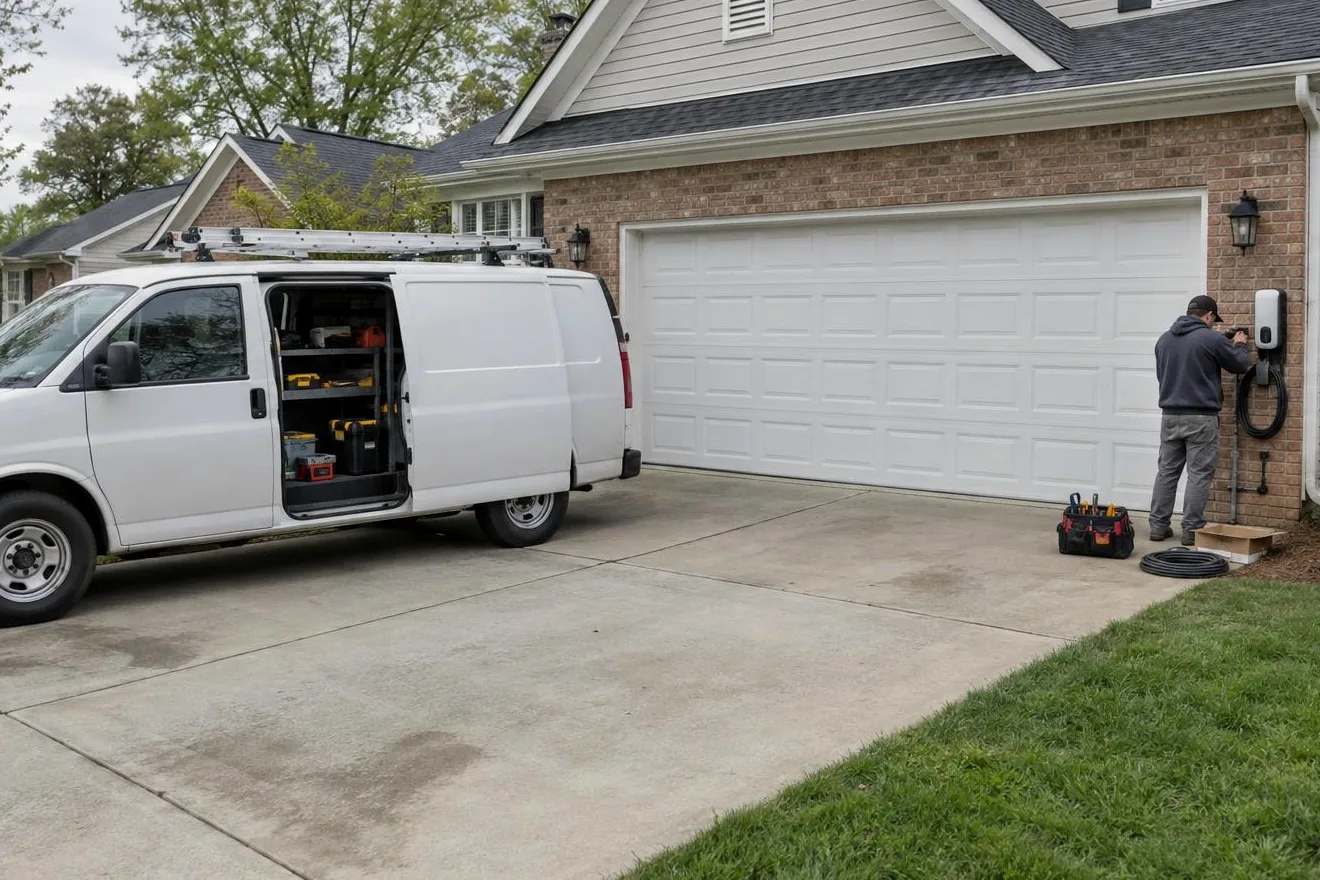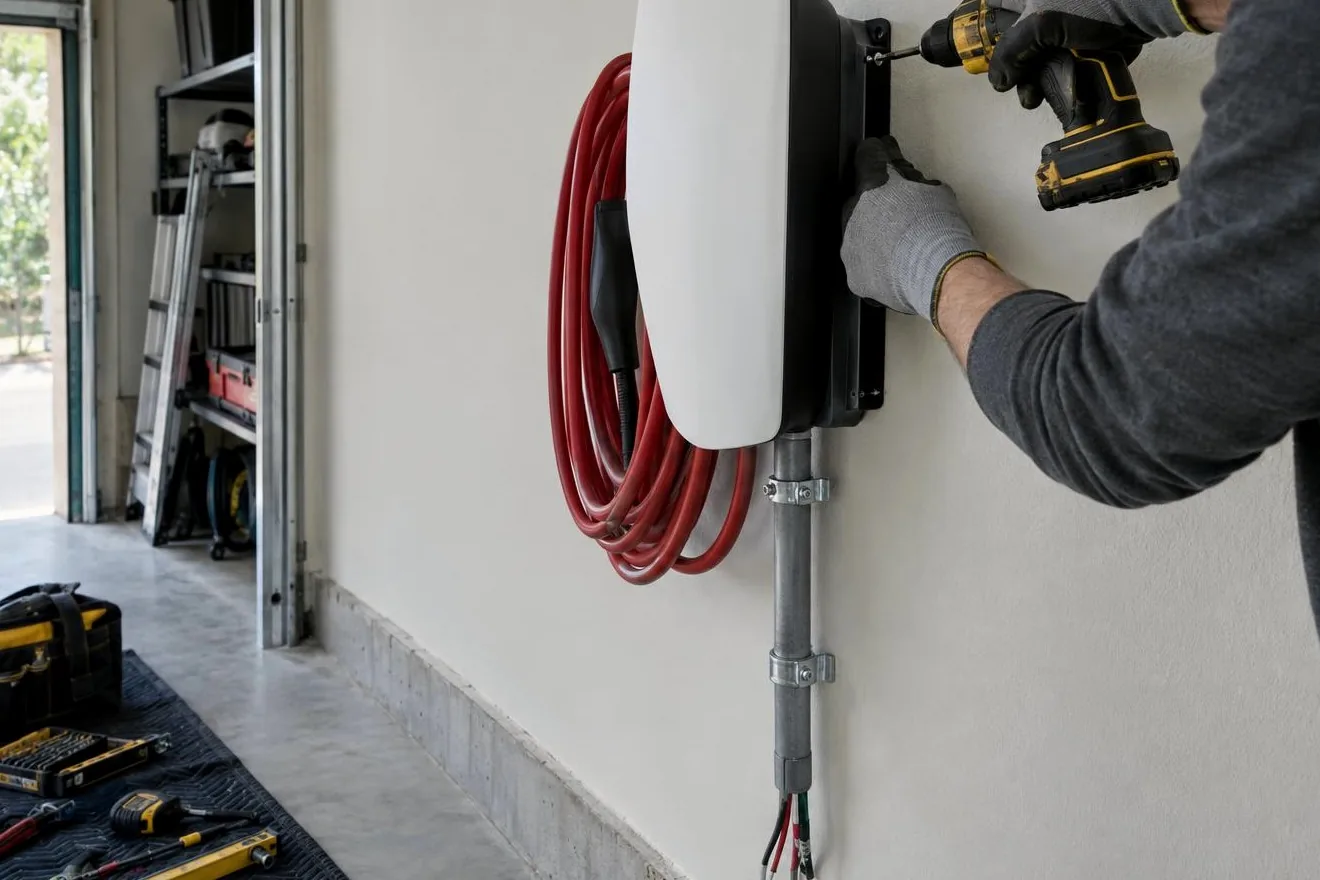
A Tesla Wall Connector is rated for 11.5 kW at 48 amps, which calls for a dedicated 60-amp circuit from your panel. In an older Durham house we first confirm the panel can spare those amps. Then we route the wire, mount the unit and pair it with Wi-Fi, so the Tesla app can schedule charging and push updates. Indoor and outdoor mounts both work.
When a Tesla shares the driveway with a Chevrolet Bolt or a Nissan Ariya, the Universal Wall Connector charges both through its NACS cable and built-in J1772 adapter. Two Teslas can link through power sharing instead, dividing one circuit between them. In a tight older panel, a Wall Connector dialed down to a lower amperage still refills a Durham commute overnight.
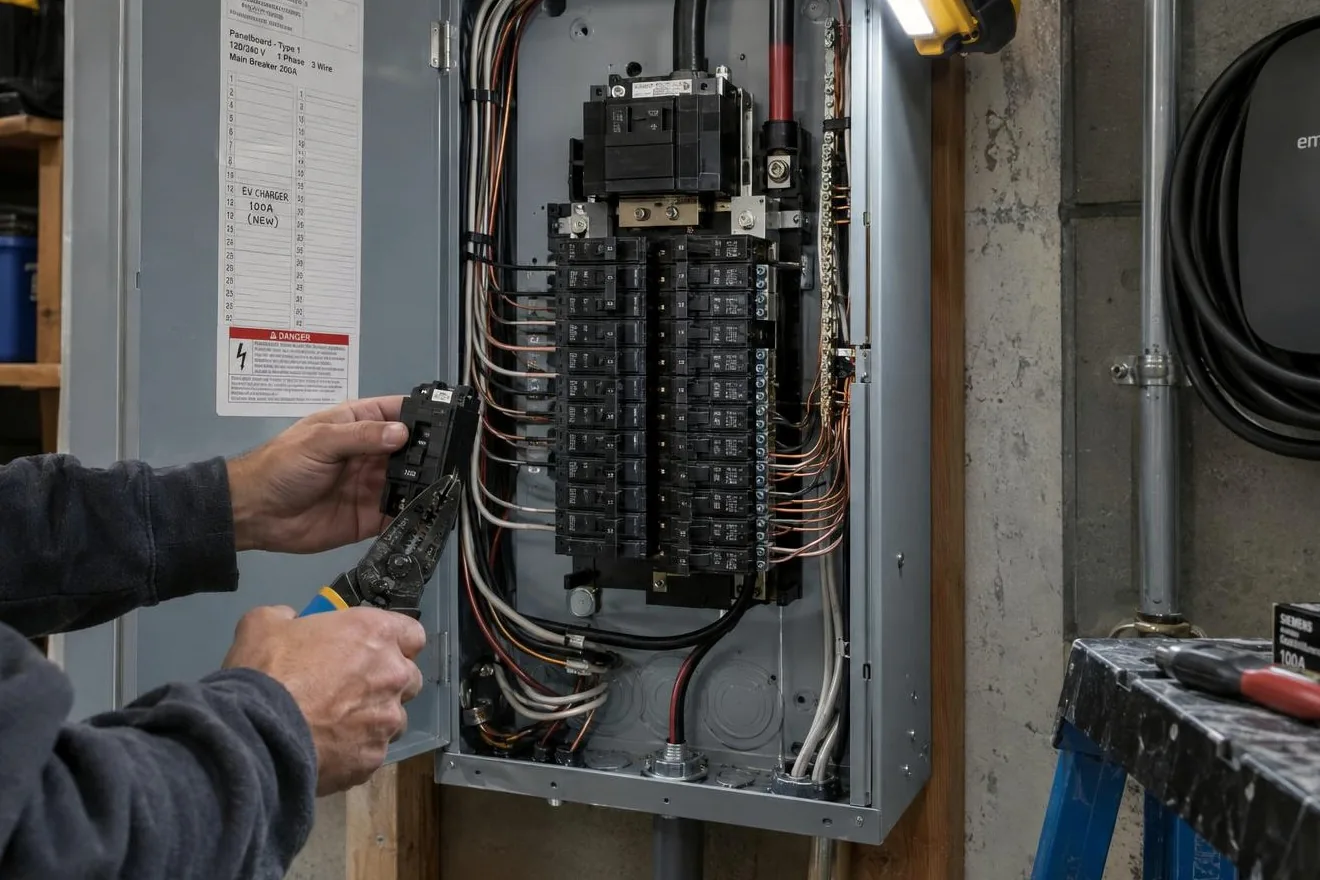
Close to a third of Durham's homes predate 1980, and that older stock is where 100-amp service turns up most. Spare capacity for a 60-amp charger circuit is hard to find on a panel that small without some help. The panel's age matters too, because worn breakers and loose connections do not belong under hours of steady charging load.
A load calculation tells us which help fits. The answer might be load management that slows the charger at peak hours, a subpanel, or a 200-amp service upgrade. Durham homes built in the 2010s often need nothing at all, and about a fifth of the city's housing went up in that decade. We price every option side by side, so you can see what the smaller fixes save.
Level 2 Charger Installation for Every Make
A Level 2 circuit adds 10 to 30 miles each hour, while a regular outlet struggles to add 2 to 5. Durham's daily commute is short, with downtown about 8.6 miles from the center of RTP. The gap shows on weekends, when a trip to the coast or the mountains uses more battery than a wall outlet returns overnight.
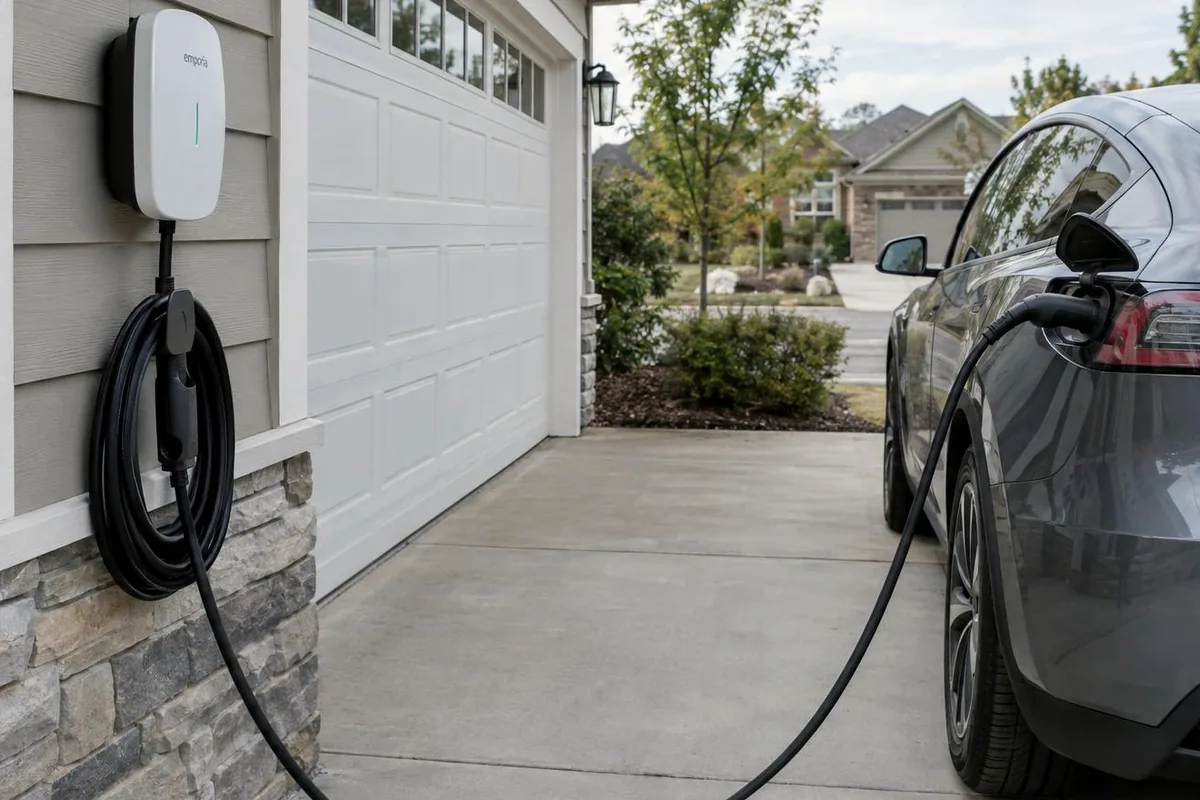
We hardwire or plug in ChargePoint, Wallbox, Emporia, JuiceBox, Ford and Rivian units. Hold off on buying until the panel is checked, so the charger's amperage fits what the house can give. A smart model lets you start charging late at night from your phone.
Plug-In Charging on a NEMA 14-50 Outlet
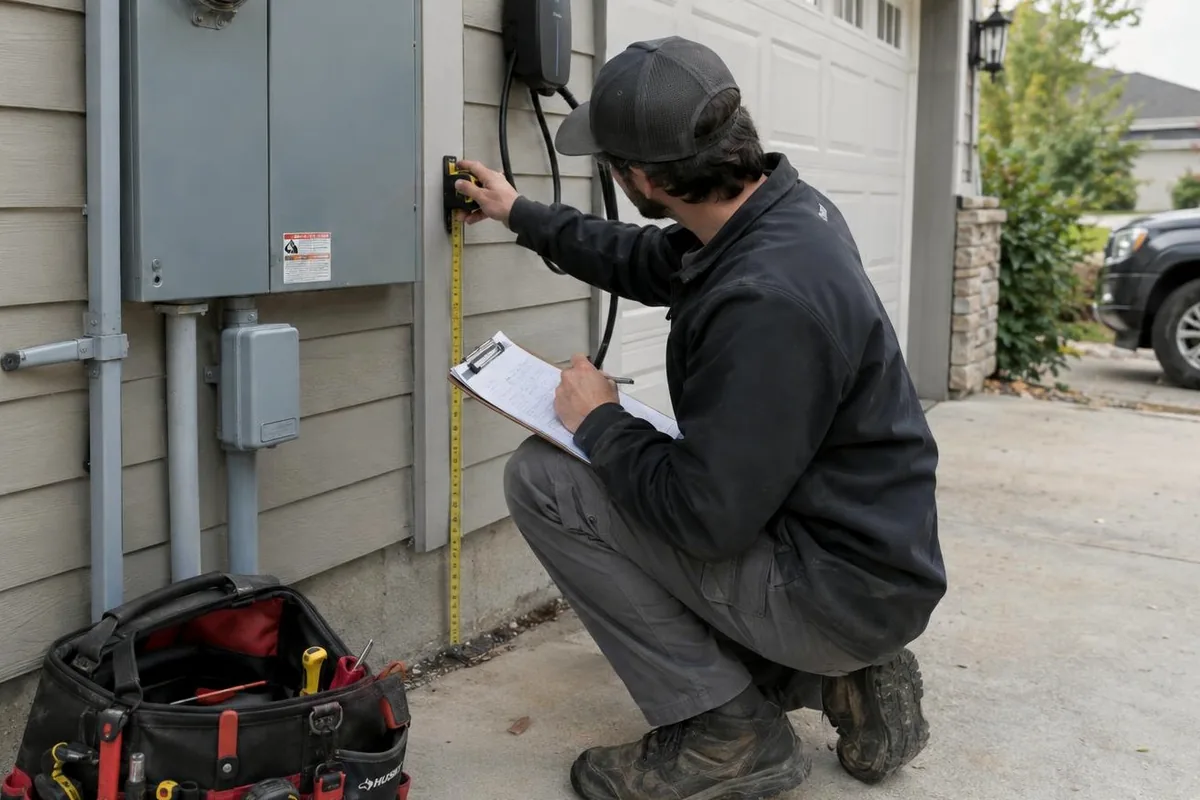
Many Durham owners start with a NEMA 14-50 outlet, a 240-volt receptacle on a breaker that serves nothing else. The mobile connector from your car, or any portable unit, plugs straight in, and a lower-amperage plug-in setup can sometimes spare an older panel an upgrade. The receptacle sits close to where you park, so no extension cord crosses the garage floor.
Plug-in chargers stop at 40 amps, because Duke Energy requires anything larger to be hardwired. Sharing a dryer outlet means swapping plugs every night, so we always give the charger its own receptacle.
Chargers on Detached Garages and Driveways
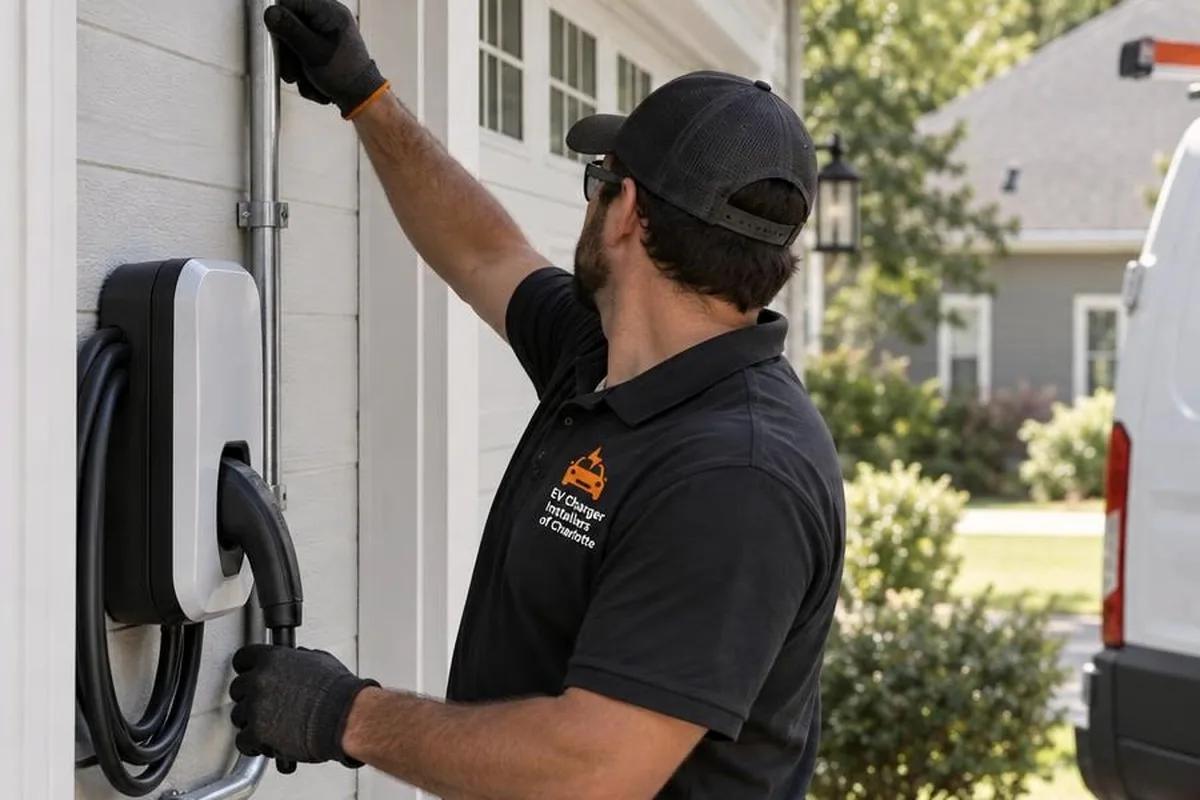
Some Durham homes have a garage set back behind the house, and others park in the driveway. A detached garage usually means a trench or an overhead run, and sometimes a subpanel so the garage has breakers of its own. We price the full run before the job starts, so a long trench never turns into a surprise on the invoice.
Duke Energy allows the charger anywhere it connects to the home's own panel, so a driveway mount still counts toward the credit. Outdoor installs get weather-rated chargers and conduit, with the mount set where the cable meets the port.
Shared Charging for Two-EV Households
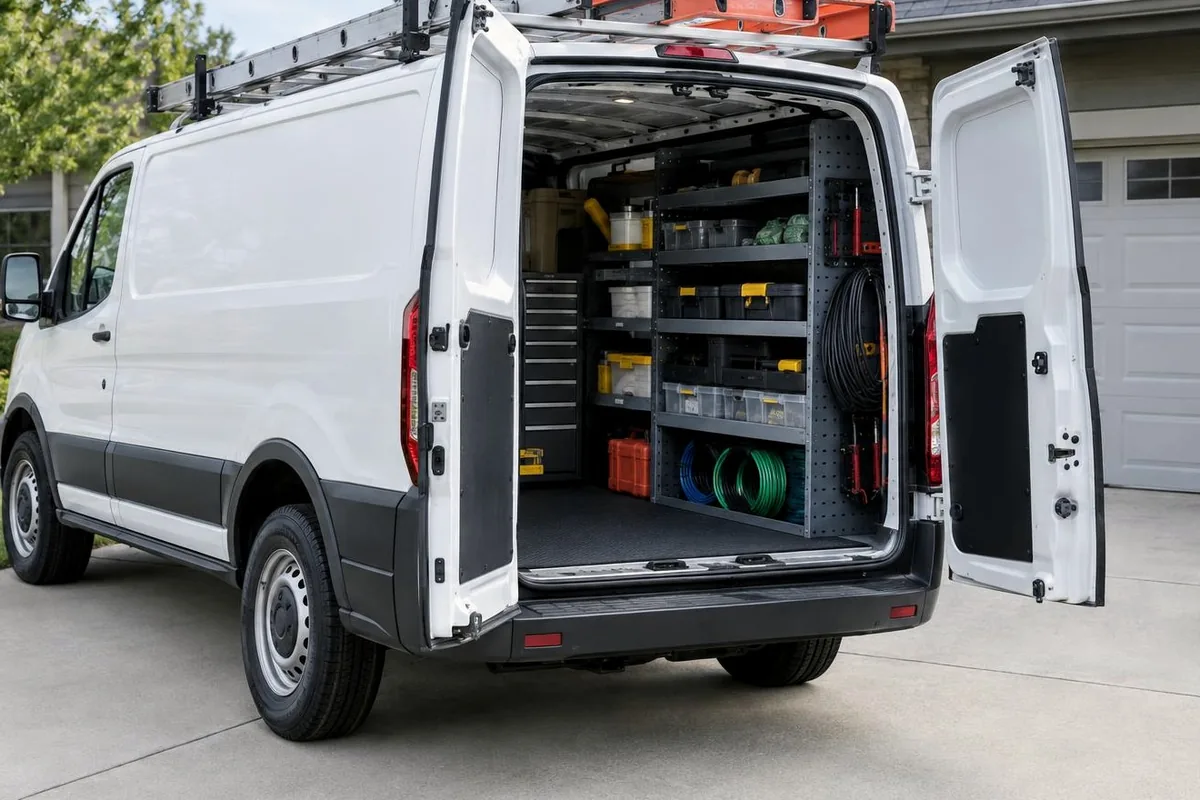
A second EV adds weight to an older panel, so we plan for both cars at once. With room to spare, each charger gets its own breaker. Without it, power sharing or load management splits one circuit, and both cars still finish on most overnight schedules.
Tesla power sharing can link up to six Gen 3 Wall Connectors on a single circuit. A mixed garage, a Tesla beside a Kia EV6 for example, does well with load management plus a Universal Wall Connector for the Tesla side. We sketch the plan at the estimate, so the second charger fits without reworking the first.